Saturday, April 22, 2023

My 60 Favorite International Cities, Pt. 1: #60 - 31

 I like that this is a living, breathing document since I first wrote my Top-20 cities back in 2013. Anyway, we're up to 70-now, and in reality, if I remembered more about my trips in 1999-2001 to Europe, I probably could have added quite a bit more.


*************************************************************************

The last time I did this was in 2015, and since then I've added a few more cities to the list. Not as many as you would think, but enough to warrant another go at it. I didn't have 5 more to add, but a couple and I'm really opposed to dropping anything off, so I'm just going to go to 32.

*************************************************************************

The last time I did this was late in 2013, following my Round the Trip world. I don't know why I'm choosing now to update the list, but it is now expanded to 30 cities, and adds four new places that I've visited the last two years, and then an additional forgotten gem from my Round the World Trip.

Again, these are ranked as cities I would visit (all of them I have visited), not where I would live. I would live in Geneva, but probably not visit again because there isn’t much to do, it is cold, and some other reasons. There are places that I wish I could rank because from what I’ve heard from family/friends that have been there they seem really good, like Moscow, Berlin and Hamburg, and when I visit them, I will update this list. Also irrelevant is the ease of getting to this city. Singapore isn’t hurt because it is the farthest commonly visited location from NYC than any other place, and London isn’t helped because it is 6 hours away.

A city includes sites and destinations that are a reasonable distance away, so Barcelona won’t get credit for the Playas that are 2-3 hours away (and are closer to Valencia), and Athens won’t get credit for Ephesus which is 3 hours away, but London would get credit for Stratford (or whatever it’s called where Shakespeare is from, or Oxford – and Rome gets credit for the Vatican, which for being a different country, is totally part of Rome) which is reasonably close.


60.) Da Lat (2013)


The little hamlet high above the Vietnamese hills, Da Lat was probably the most pleasant surprise of any place on my RTW trip. The city itself is modeled after European cities, with parks, downtown circles and even a model Eiffel Tower. The surrounding areas houses more traditional Vietnamese fair, like temples, Buddhas, waterfalls and even roller coasters, all underneath a cool mountain air. Da Lat's hills hide many nice restaurants, bars and clubs. It isn't nearly as loud or as famous as Ho Chi Minh, Nha Trang or Hanoi, but Da Lat may be the most pure mix of Asia and Europe that I have seen. Also, it has an incredibly nice airport given the just six flights that fly there each day.


59.) Kuala Lumpur (2013)


Our first day in Kuala Lumpur, I hated it. We didn't really plan much to do and aimlessly went around. The second day, where we had a plan, it became a lot better. There are a few standout sites, like the Menara KL, the Petronas Towers, the Bird Park. The food was excellent, from down home Malaysian cooking, to fancier places. The shopping is quite nice. There are myriad cooler cities in Southeast Asia, but when you give KL a chance, it really starts to shine.

58.) Warsaw (2014)
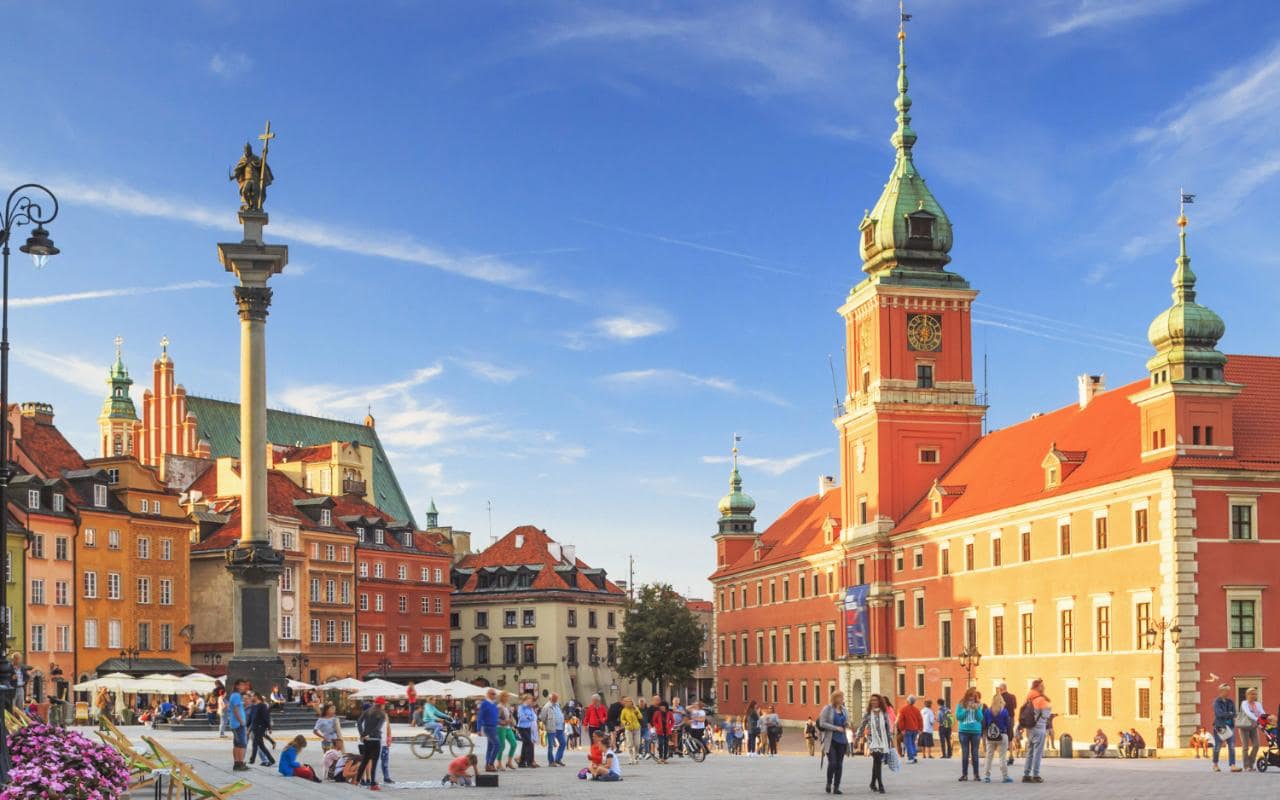


Warsaw may have gone higher had I spent more time there, but like many other European countries, the capital is often a bit too commercial, a bit too gray, than the smaller pearls of cities (like Krakow, for Poland). Warsaw has some great sites, like its main street and clock tower, the palace, and I'm sure a whole host of others I forgot about or didn't have time to visit, but it is a bit lost in a city a bit too big for its own good. The food is decent, but what I really want to commend is its bar scene. There were some great gastropubs and beer bars that littered across the Warszawa Central district.


57.) Belgrade (2017)


In 20 years, Belgrade may deserve a spot well up this list, but for now for a city on the rise it gets on. For advantages, Belgrade is cheap, it houses some nice history, really good restaurants, and a great bar and club scene. For negatives, none of these things are marketed well enough. Belgrade should continue to grow, and as it does it will replace dirty streets with cleaner ones, complete the renovation on its main church, and just overall work on the edges. Then again, I kind of like a city that can still have cool ass floating clubs with affordable bottle service.


56.) Jeonju (2022)


Jeonju was not even supposed to be on my Korea trip itinerary, a secondary choice after my primary place of Busan was taken away from me due to a typhoon. Busan maybe would have ranked higher (same with Jeju, also axed for the same reason). But anyway, I went, and found a lot to like. The Hanok Village, showcasing a modern take of traditional Korean architecture and livign was lovely. The bibimbap, made famous in Jeonju itself, was a great addition itself. The sites aren't world beating, but nice enough, from the Gyeongijjeon, to the Wibongsa temple in the outlying mountains, to fill a couple days easily. Jeonju is known as the "traditional" tourist home of Korea, and that traditionality is fully earned, warranted, and lovely.


55.) Penang (2013)


There are positives and negatives to Penang, and depending how important the positives are relative to the negatives to you, Penang could rise or fall on your rankings. Personally, food and culture are really important to me, and Penang has both in spades. It may be a little overrated with food, but the seafood night markets that litter both Georgetown (the main city) and the beaches (all within an hour or so from Georgetown) are wonderful. The Nyonya food in Penang is far better than that in Kuala Lumpur. There is enough to see, including a nice little trek in Georgetown to some interesting historical buildings (the Cheong Fat Tze is a nice highlight). Of course, Penang is also very crowded, slightly dirty and the beaches themselves are quite barren. In the end, I find this fair for what I still consider a great eating spot.


54.) Positano (2019)


Positano may have ranked differently if we went a week later - after the start of their 'busy season'. Maybe it would have ended up higher because that's how most people see Positano, or maybe lower because the crowds and prices would have been unbearable. Anyway, Positano might be one of the prettiest towns I've ever visted, with incredible views from all directions, whether up top looking down and across, or down at sea level looking up to waves and waves of houses. Positano also had a slew of nice restaurants, shops and tourism fare, be it hikes or boating. Positano is also well connected to a bunch of other Amalfi Coast towns, be it Amalfi or Sorrento or otherwise. Nice town, but a bit too overpriced and popular (in the busy season, at least).


53.) Parma (2015)


Italy is the one country where I would love to just visit a lot of their secondary cities. Parma was a fantastic little slice of Italia. The food was excellent, and the eponymous cheese was even better. The balsamic was the cherry on top. Yes, Parma is almost fully a food tourism place. It also was a beautiful little town, replete with nice lanes serving drinks and good times late until the night. I wish I got more time in Parma to experience the life in the city.


52.) Cairo (2018)


My ranking of Cairo definitely includes Giza (about 30-60 min away, depending on traffic), and Saqqara, and adding to those two pyramid and druin complexes, if you add in the Egyptian Museum, Cairo has some truly top notch sites. Of course, my view of cities go beyond sites, and that is where Cairo starts to struggle, be it the lack of truly great food, the restrictive nightlife that puts most fun places out of the reach of solo travelers (the old 'couples only' rule). These things are important to me, particularly the food aspect, and Cairo doesn't stack up. It does with key sites though, and when you add in some nice neighborhoods, there is a chance I am being unfair here.


51.) Jaipur (2013)


I hated traveling in India in my limited tourist experience in India prior to Rajasthan. First was Agra, where the Taj was nice but completely offset by the filth of Agra. Kerala was a mess. Given those two, was not too excited to be going to Rajasthan, but I have to say it was great. Jaipur is slightly too touristy, with most of the city, at least as far as I could tell, built off Forts, Palaces, strange Astronomical objects, and of course shopping. For pure tourism, it is probably the best city in India, even if it gets a bit too hot at times.


50.) Johannesburg (2016, 2018)


I've flown into and out of Johannesburg three different times, but spent a total of one night and about two days in the city, seeing a few of the main sites, but in reality not enough to get a real true sense of the city. What Joburg does have are some nice sites like the Apartheid Museum, a few gentrified neighborhoods, some classy foods and areas, the nice lion safari on its outskirts. The negatives are its sheer size (it takes forever to get from place to place), and the danger. Now, that danger part is being unfair - Cape Town has a higher murder rate, though most of that is localized into slums - but when you drive through posh districts and suburbs and every street has barbed wire it gives a less than stellar impression.


49.) Munich (2000 & 2009)


I have a strange history with quite a few international cities, and Munich is another one. I had both my 9th and 18th Birthday in Munich (in related news, I’m pretty sure where you can find me on April 7th, 2018 **editor's note: I was in Mexico City....**). The first during my initial trip to that part of the world, and the 2nd on the penultimate day of our Orchestra’s tour of Austria (we flew out of Munich). Berlin is supposedly a great, modern city, but out of all the cities I have been to in Germany, Munich is by far the best. It is incredibly modern, and getting increasingly so, with modern architecture abound. It is the only European city with a skyline that can compare to those in the US (not a crucial factor, but still nice). The downside is there is little to see and that German food isn’t that good. Either way, Munich will always be the place to spend any birthday that is a multiple of nine, and for that alone, it gets on the list.


48.) Hanoi (2019)


If we average out the mess present at times in its clustered old town and the beauty of its large West Lake area, you get a truly great city. Hanoi is a bit more staid than its Vietnamese colleague in the South (further up the list), but it still has its charm. The lakes throughout city create a more atmosphere and some truly stunning temples and pagodas. The food, as it surely is thrughout Vietnam, is excellent. The beer flows well. There's nothing wrong with teh city, but there's no one feature that sets it apart.


47.) Siem Reap (2013)


Siem Reap is a one-stop town, in that the only real thing to see there is Angkor Wat, but do you know what (excuse the pun), that is enough to get it a spot on the list. Looking back at my time there, even the town itself of Siem Reap is quite nice - good restaurants, nice bars, enough to do when not lollygagging around the Angkor Wat complex. Anyway, that's not to say that it would be ranked had Angkor Wat been there. Angkor Wat is one of the better two day tourism sites I've ever been to, a parade of amazing history. It's an added bonus that they've developed the town enough to make the nights fun as well.


46.) Punta Arenas (2017)


It's odd that none of the Patagonia cities are that close to the sites that surround those areas, so they were hard to judge. Punta Arenas is probably the most substantial town of the three we visited, with an actual down-town, with nice ornate buildings and squares, The best part of the city is an unexplainable sense of being so far away from home, from anywhere, with Punta Arenas being the Southernmost city of more than 50,000 people. There are of course some nice restaurants and bars, and a good mix of locals and tourists, which created a nice atmosphere as well. Of course, with the Tierra del Fuego and Isla Magdalena Penguins within driving distance, the tourism isn't too bad either.

45.) Turin (2015)


Picking Turin allows me to count the Piedmont wine country, and those little towns that dot it. Turin the city though, is a understated version of how incredible Italy is. It has the requisite churches and squares, but also has the open palacial squares and river-fronts that you normally associate with other countries in Europe. It has some incredible little hamlets of food, with great options for eating throughout the day (some excellent tea joints). My favorite place in Turin actually wasn't one of the two main squares, but Piazza Vittorio Veneto, one that borders the river with an amazing view of the city behind it. It was the last place we went to in Turin, an incredible capper to an unexpected amazing day in a great city.


44.) Udaipur (2013)


As somehow who hated traveling in India, picking a city that is in one of the hottest areas in the country, and a city I visited during their hot dry season, this high might seem surprising. Well, I can't recommend Udaipur, along with Rajasthan as a hole, enough. The city has some beautiful scenery being built on a far more hilly area of the country than you would expect. They have famous lakes that hold famous hotels built on famous castles. They have nice food and street shows that line the corridors of the inner city. THere's the strange love for the movie Octopussy, where screenings are shown nightly. There's a beautiful palace inside the city. And I'll stretch my 'sites withing 1.5 hours count' rule by saying that the Jain Temple at Ranakpur was incredible - and in any modern country it would be within 1.5 hours.


43.) Split (2017)


There is so much to like about Split, be it the sprawling old town with enough sites and small alleys lined with shops and restaurant to keep you busy way too long, or the modern clubs and restaurants, or the sites from its hills. I guess in theory I can include the island of Hvar as well as that is within a 1-hour boat ride away, which adds beautiful beaches and mountains to this as well. Split as a whole might be a little too commercialized - they had a lot of stalls selling the normal tourist fares that aren't always appreciated, but the city truly is a beautiful slice of culture deep in Croatia. I do love how varied the drink and food scene is there as well.


42.) Izmir (2007)


I don't know how I forgot about Izmir the umpteen times that I have done this. I loved my trip to Turkey and for a while only had Istanbul on the list. I finally remembered how much I loved Izmir when I went back and saw an album. It was a pristine coastal town, with unbelievably fresh seafood, a lot of interesting Capadoccian sites nearby, and just a cool air about it. The food and the fun alone put it well up in my mind - and also makes it a place I absolutely want to return to.


41.) El Calafate (2017)


I have a few inexplicable choices on this list, and El Calafate, a more or less one-road town, might be at the top of those odd choices. I mean, literally 95% of the restaurants and shops are either on, or right off of, the main road. Of course, those restaurants and shops are fantastic, a great number of restaurants with fine Argentinean fare (Parilla's, and more earthern restraurants). Of course, the bars are great as well, from chic library-style cocktails, to an American craft beer oasis. However, none of that would place it on this list, but the irreplaceable Perito Moreno does. One of the greatest tourist joys of my life was walking around and then on that amazing, stunning glacier. A perfect mix of blues and whites, cascading chalks of ice, and the hoth-like conditions when traversing its face. All of it special.


40.) Aswan (2018)


Sadly, I can't list 'The Nile Cruise' as a city, because combining Luxor, Esna, Edfu and Aswan would probably deserve quite a higher spot. However, only the last of those (Edfu) is probably within the 90 minute range. Aswan is a nice city, with open streets, nice restaurants and hotels off of the Nile, architectural marvels both new (the Aswan Dam) and old (Phillae temple complex and Elephantine Island). When you add in the sites within its radius, it starts to glow as Egypt's less cluttered jewel.


39 & 38.) Prague/Budapest (2000)


These two are kind of blended together for me. I visited them essentially right after each other, both 13 years ago so my memory of each is a little hazy. I remember both for mainly positives. They are both beautiful cities, with lovely rivers running through them. They have some stuff to see, but not a whole lot. They are more affordable than the major cities in Western Europe, which is a plus (but also English –at least then – is not very transferrable to there). Budapest has some great food (Goulash!), while Prague is a pilgrimage for Catholics.


37.) Melbourne (2013)


Melbourne could be a Top-20 city to spend four or five days in. There is not too much to do, but enough to keep you occupied. If you like sports, which I do, then it is even better. Melbourne tries to lay claim to the Sporting Capital of the World, and when you mix together one of Tennis' four main tournaments with the 2nd most famous Cricket Ground (and most famous Aussie Rules ground) in the world right next door, it is hard to argue. Melbourne's riverfront is a beautiful area, with amazing views of the city around it. It's food options are endless, with really good Asian cuisine throughout the city. The nightlife seemed nice enough. It also has some really beautiful scenery around an hour of its boundaries, with beautiful parks, wine regions and the Great Ocean Road. Add into that Philipp Island, which just hits the cutoff to be included with Melbourne, and you get a solid, Top-40 city.


36.) Panama City (2012)


I went to Panama with really low expectations, and I was blown away. It has a really impressive skyline, one that holds its own even if you forget that it is a poor latin country. It has great food of different cuisines. It has a ton to see, with the Panama Canal and the rainforest both falling into its sights. Other than Calgary (which I talked about in the last list) I don’t know if any trip I’ve gone on has been such a surprise as Panama, the Caribbean’s only truly modern city.


35.) Phnom Penh (2013)


I lied when I said that Da Lat was the biggest surprise of my Round the Worldtrip. Phnom Penh was. I wasn't expecting too much from Canbodia's capital, but the mix of history, good and bad, food, nightlife and surprising urbanity made Phnom Penh a real highlight for me. I really loved Cambodian food, and it was at its best in Phnom Penh, a perfect mix of Malay and Thai cuisine. Phnom Penh itself embraced its own history, not shying away from the terrible acts of Pol Pot and the Khmer Rouge, maintaining multiple areas in the city to pay tribute to those who died. The rest of the city pays tribute to the rich culture of Cambodia that preceded the destruction, with large pagodas in beautiful parks and nice museums. Phnom Penh also has a nice riverfront area that is really, really lively at night. Add into all of this that the currency of choice in the Dollar, and you get a really nice, underrated city.

34.) Luang Prabang (2019)


There may be no better small three road town than Luang Prabang, a well manicured slice of Laotian heaven deep on the banks of the Mekong. The place is built for tourists, but expertly combines Western modernity in their restaurants and bars, and Eastern serenity. The amount of temples within this small town is truly incredible, all quite well adorned and decorated. The Laotian cuisine is always a hit. Much like another town on the list in El Calafate, its main street is so full of life. From what I know, unless you want to get really down and dirty, this is as good as Laos gets.


33.) Goa (2011, 2013, 2015)


Yeah, yeah, yeah, my initial ranking of Goa was a little ridiculous. It was built off of an admittedly awesome trip to Goa in 2011, but that was a perfect storm. We were staying in the best part of Goa for a first timer who loves food on beaches at 2 AM. I was fresh off of an alcohol cleanse (which of course came after the opposite of an alcohol cleanse), and was greeted with $0.50 beer. Goa still has all those things, but I quickly realized upon my second visit that the area of Goa you stay in makes a huge difference. Stay too far South and you get isolated beaches, which I am sure are nice to some, but they don't have the same nightlife and food options littering the beach. Instead, they have litter littering the beach. Stay in the right part of Goa and it is amazing, the wrong part and it is merely OK. Still, it is unlike anything else in India, and for that it will always be in my part.


32.) Bilbao & 31.) San Sebastian (2021)


Another combination, this time not because I can't truly remember the difference (like Prague & Budapest), but because they're similar. Both cities have beautiful little old towns just jam packed with Pintxo Bar after Pintxo bar. Both cities have truly world class restaurants as well, including Azurmendi which was a truly amazing experience. They have nice coasts, great scenery and beaches, and so much else. Gun to my head, I would pick San Sebastian, whose old town is a little more cozy and inviting. Bilbao is slightly bigger, with its larger churches and museums, and open squares, but honestly I would gladly go back to either, two gastronomic capitals of the world. Especially would love to go back in a time where we have some ability to go out at night, as the few instances of being out until 1:30am belied towns with great drinks, pretty good craft beer, and a love of dancing. Honestly, the basque region is awesome.

Sunday, April 16, 2023

Re-Post: RTW Trip Day 51-55: Goa

**This is an interesting one in retrospect. My 2013 trip was amazing basically every day, aside from of course my early bouts with stomach illnesses. But if there was a part that I kind of was annoyed by in the moment, was my time in Goa. I first went to Goa in 2011, we stayed in a lively part of North Goa, in a resort with about a five minute walk to the public beach with shacks selling great, cheap, Goan seafood with waves coming in. It was amazing. I expected the same, but didn't get it - this time us staying at a Mahindra resort with a private beach and one half operating shack. But that said, sometimes times on the beach are great. There's a little nugget in here about recognizing a random smell that came on me when walking to our bungalow - a smell that took me back instantly to Mangalore. There were some great moments even if in the moment, it was all a little bit strange.**


Day 51-55: What Else Would You Do?


So, what did I do in Goa? As little as I probably could do without losing my sanity, which basically means I did what anyone does in Goa. It wasn’t as exciting as last time because back then Goa was new, an incredible change to anything else I’ve seen or experienced in India. Also, last time we were staying in Calangute, a beach in North Goa that is one of the most action packed, where things are open later and there are many more people around you enjoying the experience. In the high season, the crowd could be a nuisance, but when we were dining in the quieter South Goa, it became something I missed. I was upset at first, even, about the lack of people and the lack of shacks lining the beach outside our resort, but when I first felt that calm ocean breeze on my face as I sipped my 50 rupee pint beer and ate our 250 rupee Squid Masala, I kind of forgot about all of that. I was back in Goa doing exactly what I did last time, doing what everyone else does in Goa. What else would I do?

The only downside to our stay was that there was just one shack in the reachable proximity from the resort. There were a couple others, but they had closed for the season. We were staying at a Mahindra resort (an Indian resort company), and their patrons were roughly 95% Indian. This fact is the bane of the shacks near the resort, since, as one shack owner told us, ‘those Indians don’t eat at the shacks. We don’t serve a lot of Veg’ (before anyone claims racism, the shack owner was Indian). The one shack near the hotel was decent, but convenient, so I used it for my daily afternoon “tea” (beer and appetizer), but we ended up going to one of the other more exciting beaches in the nights for dinner. All the beaches we went to were still in South Goa, so they weren’t as full or as colorful as Calangute, but they served their purpose.

Out little Mangalore styled bungalow

Goa during the day is like most Coastal Indian towns, meaning it is way too hot and way too humid to do anything for ten minutes outside without getting incomfortable. The only place on the resort property that was cool was the second floor of the main building (overlooking the long path from the building to the beach, with rows of houses housing the rooms on the way, as well as two pools and a bar), who’s one face was open, and because of its elevated level, provided a nice breeze. My Mom called this place Mangalore (her hometown), as it reminded her of her house, with an elevated open-air area where the cool Mangalore breeze flew in. I soon joined in, as many parts of Goa reminded me of Mangalore. One of the stranger ones was a distinct smell that I used to get when walking back to the room at night outside the town-house. The smell was one I hadn’t smelled in 12 years (the last time I went to Mangalore when my Grandmother’s house was operable. It was the smell of the outdoor bath house (what we all called barn), a strange, burnt, beautiful smell.

The only complaint I have with the shack food is that almost all of the shacks share essentially the same menu, meaning the only differentiable quality is the ability of their cook, something very hard to tell ahead of time. If it was more crowded, we could have known by which was most popular, but at this time of year all the places either had no one or one or two groups, so it was really hard to know where to go. Luckily, not only are the menus largely the same, but so is the quality of the food, so we ended up eating at fine enough places.

The first night, we went to Colva Beach, a beach about 10 km north of Varca Beach (where our resort was). Colva had a row of shacks, all with one or two people. In the end, we went to the one that was closest to the parking lot, because when they’re all basically the same, it is such random factors that makes you choose one over another. There we were met with our first of many questions about what type of seafood to eat (one of the many fishes such as Kingfish, Pomfret, Sea Bass, Shark, Red Snapper, or Prawns, Squid, Mussels, Crab), and in what preparation (butter garlic, rawa fry, masala fry, stuffed). At least half of the permutations and combinations were tried by the time we left Goa. That first night I also enjoyed my first beer, one that was either 1 dollar for a pint or $1.75 for a 675ml. Decisions, decisions.

The next night we decided to try our luck with one of Goa’s more normal restaurants, as we went to the famous, reputable Martin’s Corner, an authentic Goan restaurant near Colva beach. Though it wasn’t sea-side or on the beach, it was close enough for the cool air to rush in. Martin’s Corner is a large open-air restaurant with live music, a more modern setting in an old part of Goa. The food is traditional Goan fare, so we ordered meat dishes, instead of the normal shack food that we were having like an IV morning, noon and night (not a total bad thing). We ordered Goan Sausage (as good as ever), Mutton Xacuti (very good), and Squid Vindaloo (also very good). The music was a little loud, but we expected it given that 80% of the reviews on Tripddvisor mentioned the loud music as the only real negative, but the singer had a decent voice. All in all, our one foray to a real restaurant was pleasantly good, but still not seeing the waves cascade onto the sand in front of you while you eat is a little sad.


The other meals out we ate at the same place, the same shack in a beach about 10 km south of Varca: Cavelossim. We decided to go there originally through some research that showed that there was a line of shacks near the Leela and Holiday Inn Resorts in Cavelossim. Well, we couldn’t go there because to get there we had to walk quite a distance, and it was still hot. Instead, we went to a line of shacks along the beach a bit further up North. It didn’t surround the lap of luxury in the Leela, but it did still share more similarities to what I remember Calangute to be than anything else I had seen in South Goa. There were about five shacks in a row, each with a few patrons, but the first had a lot. It was by far the busiest shack we had seen so far, and, as a sign of how popular it was, there were a lot of Russians.

Sure, it seems a bit racist to say Russians, but to anyone who has spent time in Goa, it makes total sense. Russians are as omnipresent in Goa as sand and cheap alcohol, fleeing cold Russia to beautiful Goa en masse in the winter months. This was the tail end of their winter season, but even then there were as many Russians in the shack as Goans. The restaurant even had a couple of their employees (co-owners, as most of the crowd-facing employees of the shacks are) converse with them in Russian. Some shacks even have Russian menus, and all have Russian signs under English. Goa is a strange, strange place, where Russian is the 2nd Language, and Catholicism is the 1st Religion. You really have to ask yourself, “is this India.” More so when the shacks closing at 12:00 in the offseason is seen as disappointingly early.

There’s really not much more to write about our time in Goa because we didn’t do anything else. We didn’t see any of the already limited sights. The best sight in Goa is the sun descending on the calm water as you walk along the palm-tree lined beach. The other best sight is seeing ‘Rs. 90’ next the line item of ‘Kingfisher 675ml’. There are a lot of churches and even old houses that belonged to ancestors of Goan families, but these things aren’t very close, and cabs in Goa seem to be the only thing more expensive there than it is in the rest of India. No, Goa isn’t about the sites. It isn’t about the churches and the houses. It is about the food, the beach, the alcohol, the late nights under a clear sky.

*****Top 20 Cities Update******

I’ll do a real update in a bit (because I don’t have too much to write about ‘Mumbai, Episode II’), but for now, I have to address how I now feel about ranking Goa #6 on my Top 20 International Cities list. I didn’t really think it could change, but it has. I will say that if I qualify ‘Goa’ to ‘Calangute’ or ‘North Goa’, then the #6 ranking is a little more applicable. I still think Goa makes a ridiculously good first impression. We went at the perfect time (January) and stayed in one of the more exciting, lively areas (Calangute) the first time around. Here, we went in a below average time (April) and stayed in a more picturesque, less crowded time. It allowed us to appreciate the natural beauty of Goa more, but it wasn’t the same experience for me. I do think ranking Goa at #6 was a bit of a high ranking on my part, but at its best, Goa is that good. This time it just wasn’t Goa at its best. Still, it was better than a whole ton of places that get a lot more publicity.

Sunday, April 9, 2023

Buenos Aires Trip, Pt. 2

You would think someone who travels as much as I do (and to be honest as much as any of the three of us) would be better at reading all the instructions. Especially someone like myself who had a trip aborted at its inception before, not being allowed to South Africa in 2017 due to a lack of blank pages in my passport. But alas some lessons need to be re-learned and re-learned.

This time it was us not realizing you have to go quite early to go through immigration for the ferry to Colonia del Sacramento in Uruguay. The fine print of the ticket says you have to be 2 hrs early. We did not know this and woke up about 90 min early. It was about 60 minutes ahead of schedule when I first noticed. After some googling said 60 is more like the true cut-off, we made a call not to go also because what was unsaid is that we have to go early for the ferry back as well, which would put the grand total time of our trip at about three hours in Uruguay, even if we were able to sneak our way on the ferry in the first place.

What this did give us was an extra day in Buenos Aires. Even after taking advantage of it – admittedly with a slower pace than even our other days here – there are still things we won’t have done. One was on our list today, the Japanese Garden (Jardin Japonoes) which had a truly lengthy line. Granted, it was moving fast, but we figured that this place wasn’t enticing enough to us for any of us to put it on our list to visit, it is probably okay skipping and avoiding the line.

We did walk around the entirety basically of the giant, sprawling park that has the Japanese Garden walled off in one corner. The main attraction of the park is a really well manicured rose garden in a little peninsula with a giant lake placed around it. This whole area is wide open. Buenos Aires, like all South American cities I’ve been to, are magically green despite their heavy density.

The best part of the day was our lunch at San Telmo Market, a sprawling indoor market in the San Telmo neighborhood, a part of the city that is a bit older and weary. This haven of food and shopping livens it right up however. The food stalls were in the middle and packed to the gills – a choripan stall (which is where we ate, seemed to be the busiest), a tapas joint, a open-flame grill joint, and so much more. We had a late lunch, around 3pm, and the place was still packed where we had to silently circle like hawks waiting for three poor seats to open up. The actual choripan was great as well, personally better than Chori, which was our lunch the first day. I got an “Espanol”, which had the Chorizo, with friend string onions, patatas bravas and an egg. Decadent for sure, but also was my first bite to eat at 3pm.

Another interesting part of the day was seeing different parts of Buenos Aires, namely as we drove in an uber we went past the more modern Puerta Madero area, which we walked around the following day. Here, Beunos Aires suddenly transforms into Toronto or something, with ornate government buildings and glistening glass ones side by side, with trees everywhere. Certainly, I did not expect this random little gem inside of Buenos Aires.

The last two meals on the trip deserve some mention as well. The last was our lunch on the final day at La Carniceria, which is a parilla of some reknown, though certainly not Don Julio famous. Still, the place was packed full right at the crack of 1pm (opening time). The place has a similar menu with a few sides and starters (we got a lamb spiral sausage) and then four meat choices. What was interesting was how elevated the starters and sides were. We were seated near the pass so I could see some of them come out that were not stuff we ordered and they all looked like fine dining.

The star though is the steak, which was being cooked in the fire in front of us, with the guy taking giant slabs of steak onto the parilla with indirect heat for a good 40 minutes before they were taken off and I guess finished in the main room. For as delicate the plating of the appetizers were, the main star was served on a plancha, glistening and fat as ever. Too much meat, in reality, but we made good dents into it.

The other meal was at Misheguene the night before, which is a Jewish-Argentinean restaurant in a trendy upscale area (a corner of Palermo). The place was full when we arrived at 8:30, seemingly in the middle of their two main seating times. Around the 9pm mark tables were slowly emptying, but by 10pm they were all filled. Understandably, we very clearly noticed the early diners included a lot of English speakers, and the later set seemed all Spanish speaking. We got the 6-course tasting menu (that increases to 8 with a bread starter that it seems everyone gets, and a chocholate & nut covered matza as a last course). The food was uniformly excellent, but also was mayb e the heaviest tasting menu I’ve had.

The best course was either the kibbeh served with such perfectly made za’atar dusted crackers, or the centerpiece which is a perfectly cooked cube of pastrami (the places signature dish) smothered in a perfect wine reduced sauce with an accompanying side that was beautiful itself. The food is truly elevated and earnest to what chef Thomaz Kalika wanted when showing off the cooking of his abuelo and bis-abuelo (his words).

The last few bits in Buenos Aires were dawdying around main areas just soaking in life. Another aspect I’ve come to really appreciate about traveling in certain cities is how rich a life the city has by itself. I would contrast this with say Bangkok, which would cease to exist in its current form without the incredible number of tourists that it brings in. Granted, tourists are going there for a reason (me included), but in Buenos Aires, I wouldn’t be shocked if a high majority of people we interacted with, or who went to the same restaruants or bars we did, are locals. It helps that it was a Holiday weekend but Buenos Aires was popping. No better example than our last spot on the last full night, when going back to Under, we left in about an hour feeling a bit too overwhelmed with the sheer size of the crowd. It wasn’t getting any thinner from 2am when we got there to around 3:15 when we left. I’ve been to clubs before, even in a country that much like Buenos Aires, has their clubs run the beautiful 11:50pm to 7am schedule (Seoul), but seeing this maw of people just having an amazing time, was heartening.

A few people did ask if it was weird we went to Buenos Aires for four days. Like, wouldn’t you want to see the rest of the country. Granted, I had technically been many years back (for a day stop in Buenos Aires, and then El Calafate being in Argentinean Patagonia). But in a way, I’m happy I got to immerse myself in Buenos Aires whole hog. Certainly there is much more to see in Argentina. Hell, there is more to see in Buenos Aires itself – from the Teatro Colon tour that eluded me, to seeing a Tango show, or going to a Guacho ranch, or actually going to Uruguay…. But when (not if) I do make a return trip to Argentina, I can focus on the rest of the country and give lesser time to Buenos Aires, knowing that I’ve lived a full four days here already.


**EXTRA: City Ranking

As I come to the end of my four days here, I’ve started thinking about where this city ranks on my list. I have the following South & Latin American cities already there:

45 – Punta Arenas

40 – El Calafate

35 – Panama City

18 – Lima

17 – Mexico City

5 – Santiago

Firstly, I really do need to go back to Santiago and give that #6 ranking a more serious look. I don’t like dropping cities until I do get another chance to evaluate. But leaving that aside, the real question is do I find Buenos Aires better than Lima or Mexico City. It really is tough. Lima and Mexico City have more latin culture – not to mention in the case of Mexico City, more authentically “latin” food. Buenos Aires is more green and probably more touristically meaningful than Mexico City. They all have the same cool neighborhoods, such as Palermo in Buenos Aires vs. Barranco in Lima vs. Polanco in Mexico City. Where Buenos Aires may suffer is the other two have better food and as good bars/cocktails. Buenos Aires has the party scene over Lima and Mexico City (at least to my knowledge). It’s close. Buenos Aires probably fits right in that range, if slightly below the other two. Either way, it more than stacks up and right now I have another data point supporting my belief that this is the most underrated part of the world, travel wise.**

Buenos Aires Trip, Pt. 1

In keeping with a recent years theme of traveling for my birthday, taking advantage of first covid deals and now aggressive deal hunting at least five months in advance, I’m on a trip to Buenos Aires with two other work friends. We got the tickets a while back when United was having a flash sale, and even after me having to factor in a couple route changes (the main flight to Buenos Aires is from Houston, but now going to Houston from Miami, and coming back to Grand Rapids (for work).

The flight into Buenos Aires was certainly eventful, mainly around terrible weather in Houston (really the entire Midwest) that threw the trip into chaos even before it started. There was a good chance I would miss my connection, but of course the bad weather in Houston extended out to impacting my trip’s departure, up to the point that they discovered a mechanical issue on the plane to Buenos Aires, necessitating an extended 2 hrs delay.

All was good though, I made my trip and was upgraded into United Polaris Business. The flight was great – the seat as good as ever. United’s catering is still nowhere near world class, but they’re soft launching some improvements, such as probably the best main I’ve had on all my United Polaris flights – a really well cooked short rib with good sides. They also brought the Sundae cart back which was nice. In the end, I’m never opposed to flying business, but a 9:20 flight in Business isn’t as great a deal as when I’ve been lucky enough to score Polaris to India or South Africa.

I arrived too late to do our first tourist event of the trip, a tour of the Teatro Colon – booked at 12, a good 3.5 hrs after the last of us were supposed to land – but we were able to shift that to Sunday, and we could start the trip proper.

I’m writing this deep into the second day of the trip, at a brief respite at the hotel. Not as brief as we would like. We were able to get our two highest priority reservations, but could only get them at 8pm and 8:30pm, and given Argentina’s super late night eating (and partying) culture, this is like having dinner at 5:15pm back home.

Anyway, 30 hours or so in, I think I’ve been able to distill Buenos Aires (or at least the main parts of the city I’ve been through) into one succincy statement: For better or worse (and mostly better) it is the most European of the main South American capitals I’ve been to (this vs. Lima & Santiago). Given I am a weirdo who prefers non-Europe to Europe generally, I don’t know if this will end with me preferring Lima and Santiago as places, but Buenos Aires is basically a European city, in terms of layout, architecture, lifestyle, situated in a far more hospitable and beautiful part of the world.

Case in point, the blocks in the Recolata neighborhood (mostly known internationally for its parks and its sprawling, art museum of a cemetary, are very similar to the endless blocks and blocks of the heart of Barcelona. The buildings around most of the main plazas remind me a lot of Madrid. The giant breweries that are on a lot of block corners with people spilling into the streets reminds me a lot of Italy.

It makes sense in a way. Argentina, unlike many of the other South American countries, does not have its history so rooted in this continent. There is still a Quecha presence felt in Lima, and both Lima and Santiago are situated with the Andes in between to Beunos Aires, a mystical border the Spanish influence seemd to recende against. Of course, many know that a majority of Argentineans are non-Spanish European back about 4-5 generations – hence the prevalence of seemingly Italian or German last names. Anyway, this positions Buenos Aires well.

I won’t do a full diary, but just a few highlights, starting with Palermo. Granted, my discussion of the Palermo neighborhood likely extends far beyond the true understood boundaries, but Palermo with its tree lined streets of bars, shops, restaurants and life are just magical. One day when I’m really bored on ideas and have a lot of time to think, I’ll do ranking of neighborhoods in cities, and Palermo will be really high up. There’s also one aspect I love about Palermo (and truthfully, Buenos Aires in general) and its something that hit home for me when I was in Ho Chi Minh City last year – there is a tremendous lack of pretension here. Specifically when compared to Europe. It’s not like people don’t dress well and some are flashy, but there is an approachability of everything in Buenos Aires.

Case in point, after our dinner the first night at Peron Peron (information on that experience to come) we went to Desarmadero Bar, a  craft brewery half a block away – a spot made for my heart with 23 of their own beers on tap. The place was packed, spilling into the street. Deep indisde its recesses sat it actual bar counter with about 10 stools. Half taken. We took some and just sat there. I guess in theory you can do this in Paris or whatever, but here we were almost invited. I don’t know – it’s just different.

Peron Peron was highlighted on Somebody Feed Phil, most noted for its weirdo owner/chef that regaled Phil with stories for his love of Argentina’s Peronist period. Granted, nothing about the restaurant is subtle. There is Peronist art on every nook and crevice (including the ceiling), celebrating both Eva and Juan Peron. There are statues and figurines, and each of the dishes has a kitschy name about the revolution. Just when you think this is a bit too much, every hour on the 00:10 min mark, they blast the Peronist March (effectively the National Anthem under Peron times) and honestly 80% of the crowd was signing along, including loudly clapping and chanting to the “Peron! Peron!” lyrics. It’s a scene, and by the third time (people in Argentina serve SLOW….) we had looked up the lyrics in Google and were semi-chanting along (admittedly, partially out of fear of being called out as non-believers).

The food itself is quite good, from the empanadas that we all split a dozen of (best being a braised osso bucco empanada!) to our mains, one steak, one fish and a larger portion of that fresh osso bucco, as large a piece as I’ve ever seen. IF the food wasn;t good, I’m sure people nostalgic about the Peron days would still come, but the food is good, and the scene just makes it more enjoyable.

Dinner the second night was more reputed and more lavish – a meal at Don Julio Parilla, which has shot up the list of The Worlds Top 50 restaurants list, mostly for just being the best, most audacious steakhouse imagineable. We scored a booking at 8pm which was the only time we could get. It was already packed with a gaggle of people about 6 rows deep on the corner having champagne waiting for their tables. When we left at 11pm, there were still those six rows.

For the meal it was really about the steak. We got an order of a suasage wheel which was excellent, perfectly succulent and tangy. We also got a couple of sides, the best being the “sweet potato burned to the ember” which was basically a sweet potato raosted to black, but perfectly juicy on the inside. For the steaks, anyone can choose from 10 options with set sizes, from standard rib-eye and strip sirloin, up to tomahawk and T-Bone. We split a T-Bone, and a tenderloin – both were just incredible. We asked for medium, which was a perfect US medium-rare. They were so juicy, so perfect. I’m not like an uber steak guy, and personally despite my ability to cook a lot of different things, I’ll admit that I am just not all that good at cooking steak. But this place was exceptional at it.

They also had great wine – with us swilling down two carafes of a malbec. Somehow we were off on the conversion by a factor of 10, so what we thought was a $5.50 carafe was instead $55. Of course, we probably should’ve realized that in no way was that going to be just $5.50.

The night events were busy breweries, great cocktail bars (tres monos, the 2nd most reputed in Buenos Aires, but the most reputed – Floreria Atlantica – is really out of the way from anything else), and searching through a few different club options before finding one that actually worked. To be fair, the first night we went to La Calle Bar, which is a hidden bar (not speakeasy – the place is more of a low-key club) at the back of a pizza joint that just had a great vibe. The music was all latin and/or reggaeton, and everyone bar us seemed to know every song. It be like that sometimes. The final spot was Under Club, a place we already had tickets to the following night. We had bought tickets to a shjow at Niceto Club the 2nd night, but the line to enter even for those with tickets was at least 30 minutes (could be a huge underestimate) so we took our talents down the road to a place that is more our (or at least my) scene – dim lighting, fog machines, pure EDM, basic drinks. Reminded me a lot of The Black Box in Denver, in a good way. Overall, first impression of Buenos Aires is a super strong one, and more to come.

Saturday, April 8, 2023

Re-Post: RTW Trip - Day 44: Jaipur

**There's some weird elements of my time in Jaipur that made it deserve its special re-post entry. Namely, this was my first full day touring India that I actually enjoyed my home country. I love traveling to India because I am Indian and I know people who live in Mumbai and Bangalore. If I didn't, I would probably never go to Bangalore, and maybe go to Mumbai but be way more annoyed at the inefficiencies of India. Anyway, my first time really being a tourist in India was in 2001 to visit the Taj Mahal. While the site is great, my main takeaway, to be honest, was the dirtiness of Agra. The second time was in 2011 when we went to Kerala and the backwaters were muddy at best and mucky at worst. But Jaipur, a place I was basically forced to go to... somehow was great. Also hidden in the depths of this post, is me searching for coasters. This was a seminal moment. I had traveled before, but this was the first time I was really in search of a specific item as a curio. It worked - I found some great coasters specifically during our night trip to the Chowki Dadri. A love affair of both coasters and souvenirs from trips in general started this day 10 years back.**


RTW Trip: Day 44 (4/8) - Jaipur


Day 44: Jaipur (couldn’t think of any pun-styled name)


We woke up relatively early on our first full day in Jaipur, trying to do as much as we could before the hot midday sun reared its bright, ugly head. Of course, since the main sites in Jaipur proper only open at 9:00, it is rather hard to do this. Thankfully, the Rajasthan heat was slightly overrated. It was hot,no doubt about it, but considering the lack of humidity, it was far more pleasant than Bangalore, and far more pleasant than Malaysia, Thailand & Cambodia before that. We took a rikshaw to City Palace inside the Old City, separated from the rest of Jaipur by a large pink wall that is impossible to miss. Outside the city Jaipur is actually quite nice, with large streets with fountains and statues placed in the middle of the circles. Inside, Jaipur is a mess of bazaars, with a few sites acting as needles in this haystack of vendors and bargain hunters. Our destination was the relatively quiet part of this area, the cobbled street between the City Palace and the Jantar Mantar.

The City Palace only opened at 9:30. Luckily for us, the Jantar Mantar opened at 9:00, so we had something to do. When we entered we were met by a host of people wanting to be our guide, and from this group we selected at random one man, the first of many guides to come. The Jantar Mantar without a guide would probably have been useless, but with it, we were able to fully appreciate what a weird but interesting place it really is. When you enter, the Jantar Mantar presents itself as a large courtyard with strange structures placed around. The guide quickly explained how Mahraja Sawai Jai Singh was a patron of Mathematics and Astrology, and he created this area with exacting precision to use the sun and stars. All of the objects have some astrologocial purpose, whether they be exact sundials (but they look nothing like the circular sundials that are common throughout the world), or spherical pits to tell what period of the Zodiac we are currently in, or even to find out which constellations are where each night, or even to find out the position of the earth in its rotation around the sun. All of these structures were interesting, and while some were repetitive (as in a few measured the same thing), the guide kept it all moving, and the Jantar Mantar in totality was a pleasant experience.


When we finished the half-hour tour, the City Palace was open, and we made the quick walk over to it. We eschewed getting a live guide and going with an Audio one instead. While the Audio Guide was very informative without dragging (none of the stops were over two and a half minutes, with most being less than two), we were one of a very select few to get the guide. Now, audio guides aren’t economical when you come in a large group, but it was still a little unnerving seeing so few people with one. I tried to spin in to say that we were just a lot smarter than the rest, even so far as having to force myself from not congratulating the other audio guide wearers for being a member of the club.

The City Palace itself is more of a museum, built around the two main courtyards that are open to the public. The courtyards themselves hold some beautiful artwork, like a brilliantly ornate doorway leading into the first courtyard, or a little gazebo like structure housing some photos of the old Royal Family and some women doing a poojah. The other part of the City Palace Museum was a series of exhibits featuring the traditional dress and furniture of the Maharaja of Jaipur, and then the weaponry and barracks, and finally a quick tour of the public viewing area, a large, lavish ballroom adorned with a beautiful canopy in the middle. Overall, the tour was quite good, and because of the use of heavy fans in the indoor portions, quite pleasant despite the heat.


The final tourist stop before my Mom entered Shopoholistan was the Deji Govind Temple, which was well rated in our guidebook and tripadvisor, but was something of a disappointment because it was just a temple. My only real observation was that it was far cleaner than the temples I had visited in Southern India, as similarly Jaipur was cleaner than most of the cities in Southern India
After our foray in the City Palace, we went to experience another Jaipur staple, vegetarian food. I was deathly afraid of being stuck with vegetarian food for my birthday dinner, so I put off eating at a true veg place until today. We found the famous (as far as Jaipur is concerned) LMB, short for Laxmi Misthan Bandar, a cool air conditioned oasis deep inside the bustling maw of the Johri Bazaar (one of the main ‘bazaars’ in Jaipur’s old city). Not wanting to have the usual South Indian Veg fare, I decided to have Rogan Josh, a dish I usually have with mutton, but this time it came with baby corn. I can’t believe I’m saying this, but it was still very good as a curry. I’ve always wondered how vegetarians live day-to-day without the amazing gift that is meat, but I can at least believe that someone could last three or four days now.

After we finished at LMB, I returned to the hotel to do nothing but have a mug or two amidst the peacocks, while my Mom shopped at the various bazaars for the handicrafts. I had very few things I was shopping for during my time in Rajasthan, so I felt that walking around in 95 degree heat through shops and shops watching other people shop is not really the best use of my time. Then again, drinking during midday and playing Zelda on my N64 emulator in a courtyard in Rajasthan isn’t really either, but at least that’s something I’ll remember for a while.

My Mom returned around 5:30, and took her turn drinking amidst the peacocks, although her drink of choice was tea. We then took a quick rest and around 6:30, we were picked up for a thoroughly Rajasthanian evening. The destination was the Chowki Dani, a ‘Rajasthani Village’ tourist attraction. It was described to us as a theme park created to look like an old Rajasthani village, with the usual attractions like dancers, artisans, shopping, elephants, camels and traditional Rajasthani meals. From the outside, it looked small and a little disappointing. Thankfully, there was an inside.


When we entered, we were immediately accosted by different stands looking to sell tickets to the park with their specific dinner option attached (you buy a ticket that gives you entrance and dinner, but there are a few different dinenrs). In the end, I kind of forced my mom to eschew the traditional Rajasthani Thali dinner for the buffet, as I feared ending up in a situation where I had an all-veg Thali where I liked only a few of the options and was left hungry. At least with the buffet if there were two or three good dishes I could gorge on those. After we booked the tickets, we entered the Chowki Dani grounds.

It really is exactly as it was described, a large faux-village with many different staged attractions. There were a couple of stages that had dancers with backing music, then an area with palm-readers, a stage for a magician and a stage for a puppet-show (which is far more artistic and impressive in its Rajasthan version than what I was expecting). The whole scene is no doubt very touristy and a little cheesy, but for a great environment where you don’t have to worry about being accosted by hawking salesman or not have to worry about cars driven by awful drivers possibly hitting you as they avoid the cows on the street, sometimes touristy is a good thing. The shows were nice and seemingly authentic to the Rajastani style of dance and music. We didn’t go for any of the extremely-tourist-oriented fare, like Henna, or palm reading, but then again nothing was more touristy than the camel and elephant rides, which of course we did. For 20 and 50 rupees respectively, how can you blame us. The rides were short, but they contained the essence of riding one of these big mammals, bumps and jarring movements and the occasional ducking from trees.


After we finished walking around the main area, which included trips inside a temple hidden inside a man-made cave, and a resort area with cute little houses, my mom decided to check out the other main attraction of the Chowki Dadri: the shopping area. Because I had no verandah with beer and peacocks (and Zelda) to retire to, I had to accompany her around, and what do you know but I got into the shopping mood. The handicrafts in Rajasthan are just that good. I had a singular focus during my shopping, though, which was to get some nice crafted coasters. Obviously the fabrics are wasted on me, and I’m not an age where I want crystal/marble/silver statues and figures. No, I just wanted coasters, and they had some nice black marble carved coasters for a reasonable price. I did some quick, semi-effective bargaining and scored my first purchase of my time in Rajasthan!

After shopping we finally reached our dinner destination, which was a buffet in a restaurant on a resort that was tangentially connected to the Chowki Dani. It was a bit worrisome when the walk to the buffet ended up being quite convoluted, and even more worrisome when we realized that there were few other people in this area. I remembered back to when we entered the Chowki Dani, and the stand selling the buffet tickets were empty, while there was a crowd in front of the Thali tickets. Luckily, the restaurant was full enough, and even better was the fact that they allowed one a-la-carte non-veg item as well as alcohol, two things that definitely wouldn’t have been there in the main area. There is nothing better than going to a place expecting an all-veg buffet and ending up with meat and alcohol. These are the real hidden gems of the Chowki Dani, hidden behind all the stalls selling real gems.

Thursday, April 6, 2023

Re-Post: RTW Trip: Day 37-42 - Bangalore

**My time watching T20 - probably doesn't need more explanation. But if you need, there was Sachin Tendulkar as well**


RTW Trip: Day 37-42 (4/1 - 4/6) - Bangalore, Pt. 1


Day 37-42 (Pt. I) : Crickets


There were few a couple of standout events during my second week in Bangalore, but they were all overshadowed by what took place Thursday Night in Bangalore, deep inside the city center in the large, crowded, raucous Chinaswammy Stadium. The Mumbai Indians visited the Royal Challengers Bangalore (stupid name, I know) in their opening game of the new IPL season. The IPL is basically the most made-for-tv version of the only sport India gives two shits about these days. The IPL features T20 cricket, so instead of a 5-day test match or a 50-over game (about 8 hours), each side gets 20 overs, or 120 balls, to accrue their runs. Basically, it is cricket in its most watchable form. Also, I’m done explaining the game, because if you don’t know what the rules are, then look them up. They really aren’t that complicated. My Uncle scored him and me tickets from his work, as the general tickets were sold out, quickly gobbled up by a massive queue that lined up in front of Chinaswammy Stadium on the day the tickets opened to the public. I was greatly looking forward to this experience, both to get an opportunity to watch my first live cricket match, and to experience sports at its most primal level in a foreign country. Both experiences were great.

The first part of the experience was getting to the stadium. Because Chinaswammy Stadium is conveniently located right dab in the middle of the city, there is little to no parking at the stadium, and because Bangalore is Bangalore, bringing a car within earshot of the stadium is a death wish, so we parked in the Bangalore club, 1.5 km away, and walked. Despite the heat and the humidity (though my Uncle ensured me that I would get sweaty during the game anyway), I’m pretty sure that we got there quicker than anyone who would have driven as the traffic was that bad. I even joked that because of the precariousness of the sidewalks in Bangalore and the lack of any noticeable movement in the gridlocked streets, it is safer walking on the road past the idle cars. We reached the stadium at 8:10 (the game started promptly at 8:05), and walked around to Gate 9. When we entered, we were told that “our seats are most likely taken” and I quickly realized that the seat number you have is completely meaningless. Bangalore works on a very accepted unwritten “take whatever seat in your section” rule for games, so the only available seats were way at the back. Fortunately, we found ‘seats’ on the base of the steps on the first row of the upper deck. The stands are quite small, so despite being in the upper deck, I would venture we were about 30 feet above the oval. The siteline was descent, and despite being concrete steps they weren’t that far less comfortable than the seats. We definitely had better seats than the scores of people higher up on the stairs, and we settled in for our 40 overs.

T20 games are notable for high scoring at a fast pace, as each team still has the same amount of available batsmen, but far fewer overs for them to get out. The risk of getting out quickly is far less here as there are only 120 deliveries anyway. Because of this, T20 games have generally more 4’s and 6’s than normal cricket matches, and since 4’s and 6’s are basically the cricket version of home runs, the crowd is energized, to say the least. Despite the fact that India loves cricket more than anything else, I was still a little surprised about how familiar the atmosphere felt inside the stadium. With every boundary (4 or 6), the stadium erupted in a wave of RCB flags and banners, spinning along with a tune that became all too familiar by the end of the first innings. The RCB innings started slowly (it took them 15 overs to get 100 runs, which is a pace that isn’t even good in a 50-over pace), but RCB still had their trump card, West Indies giant Chris Gayle. My Uncle, who I learned knew a lot more about cricket than I thought he knew, told me that Chris Gayle is a guy who when he is on could be great. I asked him when Gayle hit 50 runs if it is rare for anyone to get 100 runs in a T20 match, to which he told me it was. Well, Gayle ended up with 92 runs, hitting fours and sixes with ease in the last four overs. RCB ended with 156 runs, a perfectly respectable total. I wanted to capture the stadium at its best, reacting to another massive boundary by Gayle, in the last over, and right before the last ball the whole stadium started a “we want six” chant, and lo and behold, Chris Gayle appeased the crowd and my video camera, launching one last parting shot into the Bangalore sky.

The 20-minute break between innings gave me a chance to collect my thoughts on what I had just seen. First, I cannot overstate how happy at was at seeing that crowd so enthralled by their home team, so into the game. I have no idea why I’m surprised about Indians loving cricket, but seeing an almost European Footballl-like atmosphere deep within the heart of Bangalore. Then there was the cheerleaders, who are most certainly not Indian, a point of much controversy. When the IPL started, and the cheerleaders were brought over from the US to perform at games, India was up in arms about how risqué the whole thing was. Looking back, they obviously weren’t up in arms enough because the cheerleaders stayed and are a large presence in the game, with about eight sets of three cheerleaders taking up platforms on the circumference of the oval. And finally, I got to see just how crazy India is over one of its most worshiped Gods: Sachin Tendulkar.

Sachin Tendulkar plays for Mumbai (as any good Marati boy should), but more accurately, Sachin Tendulkar plays for India. In the moments in between the two innings, a group of young RCB fans moved up to the front of the upper deck and hung a well-made banner over the side which read “I’ve gone to church many times, but all I had to do to see God was to go to the Stadium” (yes, it was about that wordy). Similar signs littered the crowd, and most of these signs were being raised by RCB fans. Sachin Tendulkar is more than cricket in India, he’s more than city rivalries. There is no comparison to any US athlete. Part of this is the main US sports are all more popular in the US at the domestic level than the national level, something that isn’t totally true in European Football (where national team results are about as important to fans as club team results) and despite the success of the IPL, not close to true in India, or any cricket-playing country. When the PA announcer bellowed the name of “Sachin Tendulkar” as the opening batsmen for the Mumbai Indians, the noise and clamor from the crowd drowned out the announcer then announcing the other opening batsmen, Ricky Ponting. This may mean nothing to most people who don’t know cricket, but Ricky Ponting is almost certainly the greatest player of the last 20 or so years not named Sachin Tendulkar. Many of the career records that Sachin holds have Ponting in 2nd place. Yet, it might as well have been a 12-year old boy as the other opener. Act I of the Mumbai innings was Sachin’s show.

Both Sachin and Ricky Ponting started off slowly, getting just 4 runs between them over the first three overs (which is quite bad), looking every bit as old as they are. But then, all of a sudden, they were energized, mostly by the chance to bat against the bowling of Muttiah Muraliduran. Once again, to most people this means nothing, but Muttiah Muraliduran is one of the great bowlers of my time, the record holder of many bowling career records. Getting the chance to see Murali bowl to Sachin (and to a lesser degree, Ponting) is all a casual cricket fan (or more accurately a non-fan when at home, a super-fan when in India) could ask for from their first IPL experience. Off Murali, Ponting hit his first boundary, and then Sachin hit one. In the next over, Sachin hit another. Against Murali in the next over, Sachin hit another pounding one straight back where the ball came from. It was classic Sachin, a great show. And then, in a flash, it was all over, as Sachin was run out trying to come back after an aborted chance at a run.


The crowd cheering Sachin

Sachin’s wicket actually brought to light another little show of how popular Sachin is. The decision was close and it was given to the third umpire (essentially a booth review). IT took about a minute for a decision to come, in which the stadium was silent. I joked to my Uncle that I’m not sure what the RCB fans would want more, to see their team get a crucial wicket or to see Sachin stay at bat. Tendulkar was given out, and while the music played signaling a positive development for RCB, there was a very audbile ‘boo’ coming from the crowd, admonishing the gall of the third umpire for felling the great Sachin. Ponting too quickly followed, and Mumbai started out somehow worse than RCB, and then it happened.

Six balls, five boundaries, four sixes. Right before that sequence Mumbai needed 51 runs off of 21 balls. After it, Mumbai needed just 22 runs off of 17 balls (completely gettable). It was such a sudden reversal of what had happened in the Mumbai innings that right after the game I asked my Uncle if he even considered the possibility that that particular display was fixed, for no reason more than to provide a semblance of a close ending. Of course, there is no proof, and the people involved were established enough to almost certainly not be viable fixing vehicles, but you just never know. 

The match ended with high, high drama, as Mumbai needed 8 runs to win (7 to tie) off the last two balls. At bat was Pollard, another mammoth West Indier, an all-rounder (someone who is proficient at both batting and bowling) with the ability to launch some balls. On the penultimate delivery he hit a line drive down the oval and it appeared to land directly on the rope that serves as the boundary. The decision would go back to the 3rd umpire, where if it was deemed to have crossed on the fly it would be 6. After another incredibly-tense minute, the stadium erupted as it was correctly ruled to have bounced centimeters before the rope, bringing the game to its best possible end. A four and Mumbai wins, anything less, RCB finishes off their rival. Pollard had one more chance, but the ball was too good and Pollard hit what baseball fans would see as a lazy grounder. The second it left his bat, the stadium erupted in a way that I wasn’t even ready for. It was as loud as any US stadium I’ve seen at the end of a match, and this was just a regular season one. For one night, I didn’t miss not seeing US sports, didn’t miss not being able to witness the Devils collapse or March Madness, because I got a dose of April Madness in Bangalore.


The Last Ball... Four to win

About Me

I am a man who will go by the moniker dmstorm22, or StormyD, but not really StormyD. I'll talk about sports, mainly football, sometimes TV, sometimes other random things, sometimes even bring out some lists (a lot, lot, lot of lists). Enjoy.